
The Most Successful Coaching Journeys Start with Clear Insights
Hogan Assessment
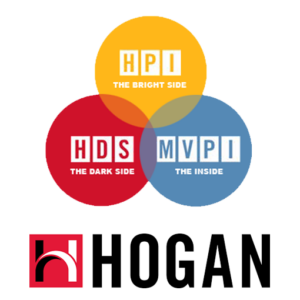
The Hogan Assessment is a well-established, research-based tool used globally to evaluate how personality shapes leadership behavior at work. It provides an objective view of how you tend to show up day to day, how you’re likely experienced by others, and how stress or pressure can affect your effectiveness.
The assessment consists of three reports:
Potential Report
Highlights your core leadership tendencies and strengths—how you are likely to show up when you are operating at your best.
Challenge Report
Identifies stress-related behaviors and overused strengths that can undermine performance, particularly in high-pressure or high-visibility roles.
Values Report
Clarifies the drivers, values, and motivators that influence your decisions, priorities, and leadership style.
Together, these reports offer a structured, data-driven foundation for self-awareness and development. For leaders seeking an efficient, validated assessment of their leadership patterns, the Hogan provides clear insight and a strong starting point for focused coaching.

Interview-Based 360 Assessment
Direct, candid feedback from colleagues is one of the most powerful tools for leadership growth—and one of the hardest to access. Most executives have participated in performance-management 360s, but those processes often limit honesty. Feedback is filtered by fear, attribution, and internal visibility.
This interview-based 360 is designed to surface what is rarely said.
I conduct confidential, one-on-one interviews with 8–12 stakeholders, including peers, direct reports, supervisors, and board members where relevant. Each conversation is held in strict confidence. Feedback is synthesized and shared only by reporting relationship, with attribution removed. Interviewees may also share perspectives intended to inform themes and patterns rather than be quoted directly. Nothing is shared with anyone else in the organization.
As an experienced executive coach, I go beyond standard 360 questions. I listen for nuance, probe beneath surface responses, and create the conditions for stakeholders to reflect more deeply and speak more honestly than they typically would. The result is feedback that is thoughtful, specific, and genuinely useful—insight that leaders rarely receive, but immediately recognize as true.

Integrated Hogan and 360 Assessment
When qualitative feedback and quantitative assessment are considered together, patterns become clearer—and easier to act on.
This integrated 360 brings two different forms of insight into dialogue: how you are experienced by others and how your personality tendencies shape your leadership under both normal and high-pressure conditions. Examined side by side, these perspectives help distinguish situational dynamics from enduring patterns, and signal where development efforts will have the greatest impact.
The real value lies in the synthesis. I look for alignment, tension, and reinforcement between the two data sources—where self-report and external perception confirm one another, where they diverge, and what those gaps reveal. This moves the conversation beyond “what the feedback says” to “what it means.” I interview your colleagues before seeing your Hogan results in order to avoid any confirmation bias.
The result is a more grounded, credible foundation for coaching goals: fewer blind spots, greater confidence in where to focus, and a clearer path forward based on evidence rather than assumption.